Discrete Trial Training (DTT)
Structured, one-step-at-a-time teaching for acquiring brand-new skills. A skill gets broken into small pieces, each piece gets practiced with clear cues and encouragement, and wins get celebrated immediately.
Structured, play-based ABA for children ages 2–12, in sensory-friendly rooms built for exactly this work. Our center sits on the Golden Valley–Minneapolis border, minutes from Minneapolis with easy access from Highways 100, 55, and I-394.
There's no fixed curriculum here. Each child follows an individualized schedule built from the goals in their Individual Treatment Plan (ITP) — and when two children share a group activity, that pairing was planned: each one is practicing their own social-communication goals, with support right there.
Sessions are play-based throughout and run on the center's own materials. Behind the play sit two evidence-based teaching methods, blended goal by goal:
Structured, one-step-at-a-time teaching for acquiring brand-new skills. A skill gets broken into small pieces, each piece gets practiced with clear cues and encouragement, and wins get celebrated immediately.
Teaching woven into play and everyday routines, so skills generalize to real life instead of staying at the therapy table. If a skill starts in a teaching block, NET is how it ends up at your dinner table.
Not a fixed timetable — your child's actual day follows their own plan. But most mornings move through beats like these.
Full-time
9:00am–5:00pm
Monday–Friday
Part-time
1:00–5:00pm
Monday–Friday
Families choose one block to enroll in; what happens inside it is individualized to your child's ITP.
A familiar face and a calm start. The session begins with your child's favorite play — building trust before any teaching begins.
Short, play-based blocks of one-on-one teaching on the goals in your child's plan, with breaks built in between.
Two children share an activity because that pairing was planned — each is practicing their own social-communication goals.
Sensory and movement breaks keep the day sustainable — regulation is a skill here too, not an interruption.
Skills that clicked in one room get practiced in another, with another person — so they hold up outside the center.
Purpose-built rooms, not a converted office: 1:1 therapy rooms, group spaces, and a sensory area — each doing one job well.
Therapy rooms
Calm 1:1 spaces built for focused, play-based teaching.
Photos of our Golden Valley center coming soon
Group spaces
Where planned peer activities and group learning happen.
Photos of our Golden Valley center coming soon
Sensory area
Movement and regulation space for breaks and reset time.
Photos of our Golden Valley center coming soon
You'll pick one setting, so it's worth picking well. The program is the same BCBA-designed plan either way — which makes this a question about your child, not about the quality of care. Both answers are good ones.
Families choose one setting, not a split schedule — and distance doesn't decide it. If you can bring your child to Golden Valley and home again, the center is open to you from any community we serve. Your BCBA talks the choice through with you during intake. For the full trade-offs, read the in-home vs. center-based guide.
Three commitments hold the whole thing up — and none of them is optional.
Every child's Individual Treatment Plan is developed and supervised by a Board Certified Behavior Analyst — goals chosen for your child, not pulled from a template.
A supervising BCBA checks the work of the Registered Behavior Technicians (RBTs) running your child's sessions routinely — most days, not once a month. That's how the plan stays the plan: run as written, well beyond the field's monthly minimum.
Caregiver training is scheduled around what works for your family, and the treatment plan gets a formal review at least every six months. That's the floor, not the ceiling — connect with the team or raise a concern any time.
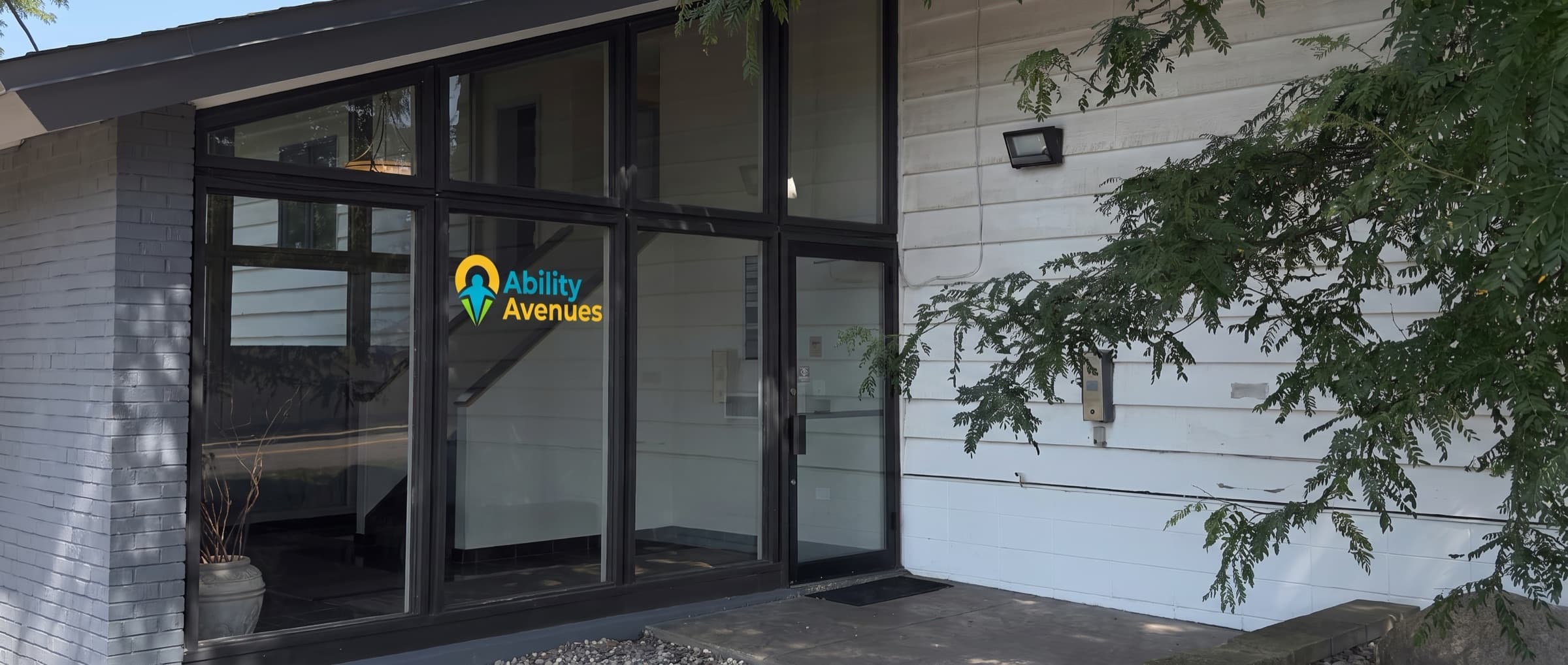
On the Golden Valley–Minneapolis border, with easy access from Highways 100, 55, and I-394. Look for our logo on the glass entrance — Suite 140 is right inside.
The center is open Mon–Fri 8:00am–5:00pm — doors open an hour before programming starts. Therapy runs in the full-time (9:00am–5:00pm) and part-time (1:00–5:00pm) blocks.
We serve children ages 2–12 across every program.
The funding part: center-based care is covered by EIDBI. We accept Straight MA and Blue Plus — see coverage details, and we help with the paperwork.
What families ask before their first visit to Golden Valley — answered plainly.
There's no fixed curriculum — each child's day follows their own treatment plan. A morning usually moves through arrival and pairing, 1:1 teaching blocks, a planned group activity, and movement breaks. Curious about day one specifically? Read what to expect at your first session.
They're structured, small, and never random. BCBAs pair children because each one is working on their own social goals — turn-taking, peer communication, joint play. Pairings follow the goals in each child's treatment plan, not a fixed group size.
Parents don't sit in on every session, but you're never out of the loop: caregiver training is scheduled around what works for your family, your child's plan gets a formal review at least every six months, and you can connect with the team or raise a concern any time.
Very little — programs run on the center's own materials, so there's nothing to buy or pack for therapy itself. We'll walk through the practical everyday items with you before your child's first day.
No. Families choose one setting and your child's program runs there — we don't split a schedule across both. If the center turns out not to be the right fit, you and your BCBA can move to in-home instead; you switch, you don't split. See how in-home therapy works, or read the in-home vs. center-based guide.
Call us. We'll help you figure out eligibility, coverage, and next steps. The first conversation needs no paperwork at all.